By Liz Tan
In the Central Valley, summer does not have to reach triple digits before life starts looking for relief.
On an ordinary summer day, when the mercury touches the high 90s, most of us simply adjust. We sweat a little bit more, pour another cold drink, and think nothing more of it. But for outdoor birds flying beneath the baking sun, those extra few degrees can become dangerous — even life-threatening — especially when the heat lingers for several days in a row.
That is when backyard water stops being decorative.
It becomes survival.
Birdseed is appreciated. A tray of sunflower hearts will always find hungry takers. A garden full of flowers offering pollen and sweet nectar is a gift to hummingbirds, bees, and butterflies. But in the long, dry stretches of a Central Valley summer, clean water itself can become more valuable than food.
A bird can search for seed. It can move from yard to yard, tree to tree, fence to fence. But safe, shallow, clean water is not always as easy to find as one would think.
That surprised me at first.
I used to think of birdbaths as garden ornaments — pretty backyard accessories, something people placed among roses or under trees because they looked charming or quaint. I did not yet understand that, to a small bird on a hot day, that little dish of water may be the difference between exhaustion and relief.
A refreshing bath is not just relaxing to watch. It helps birds cool down, rinse dust from their feathers, remove tiny parasites and irritants, and keep their feathers working the way feathers are meant to work — for flight, warmth, protection, and survival.
And the best part is this: helping does not require anything elaborate.
You do not need a fancy fountain. You do not need a complicated setup. You do not need to turn your backyard into a Vegas-style resort, although the birds may disagree and treat it like one.
A simple ceramic or stone container can be more than enough. In addition to my first copper bath, I use two ceramic platters I bought at Safeway years ago for less than $10 each. The key is to keep the water shallow — about 1 to 1½ inches deep — and to add small stepping stones from your own garden, pebbles, or a textured surface so little birds have safe footing.
That detail matters.
To us, a few inches of water may look harmless. To a small bird, a deep or slippery container can be dangerous. The safest water station is shallow, stable, easy to enter, and easy to escape.
Place it under a leafy tree or in partial shade if you can. Shade helps keep the water cooler and gives birds a more protected place to pause. In the Central Valley, even a little shade and a 10-degree difference in temperature can feel like mercy.
Moving water is even better. Birds notice it. They hear it. They often seem to trust moving water more than still water. A gentle solar bubbler can make the water easier for birds to find without making a lot of noise or turning the yard into a theme park. A soft bubbling motion is enough.
Solar bubblers are especially useful because they simplify the whole process. No major wiring. No complicated electricity setup. No need to worry much about energy costs. Just sun, water, and a little motion.
Clean matters more than fancy.
A beautiful container is useless if the water is dirty. Rinse birdbaths and water dishes regularly with warm water. Avoid heavy soaps, strong detergents, bleach, or anything that could leave residue behind. Scrub if needed, rinse thoroughly, and keep rinsing until the water runs clean.
Fresh, simple, safe water is the goal.
For small birds, keep the water shallow and add stones or landing surfaces so they can stand safely and climb out easily. Bigger birds can use bigger containers and slightly deeper water, but even then, safety matters. Add perches, rocks, bricks, or textured landing areas so they do not have to struggle on a slippery surface.
Then you wait.
And if you are lucky, the backyard begins to answer.
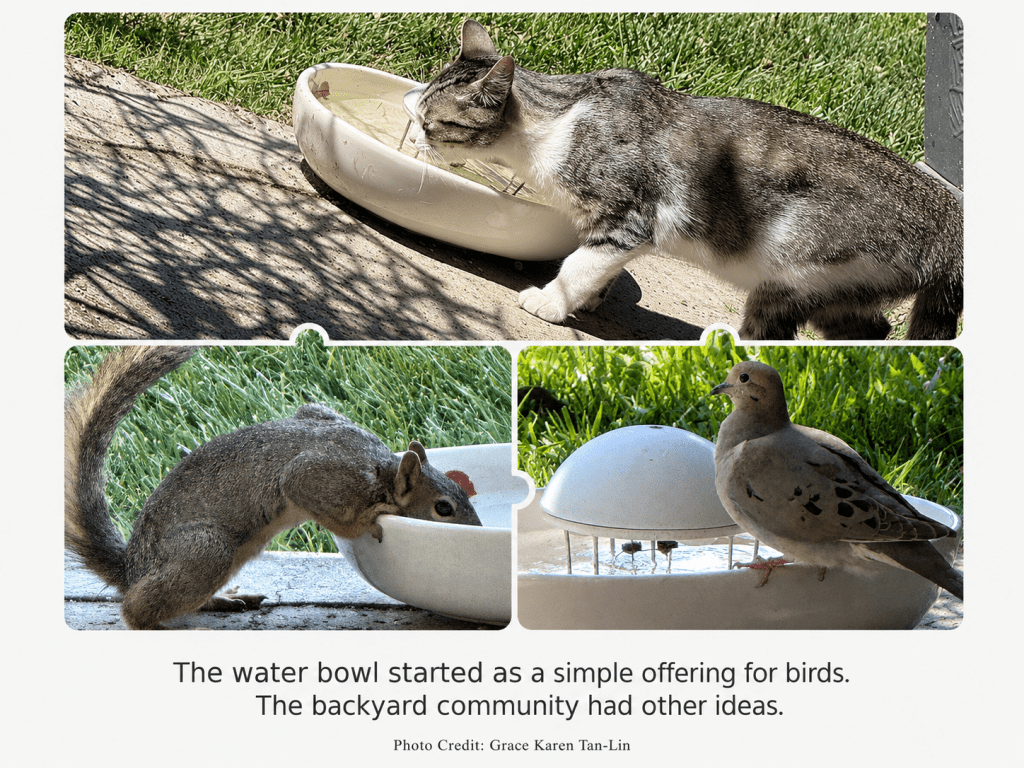
But do not be surprised if nothing happens at first. Small wildlife is cautious by nature. They may see the new water. They may even be interested. But new objects in the yard require inspection from a safe distance. Birds and squirrels do not rush into unfamiliar situations just because we had good intentions and rinsed out a pretty bowl.
They have to decide it is safe.
Patience pays.
Because the first time you look out your window and catch small feathered bathers splashing, drinking, fluttering, or taking turns at the water, your heart will sing a little. Maybe more than a little.
And then you understand how easy this pastime is to become addictive.
I started with one feeder and one birdbath. That seemed reasonable. Modest, even.
Then I graduated to simple low ceramic platters. Nothing expensive. Nothing fancy. Just shallow containers with pretty patterns, many of which can be found at Goodwill, thrift stores, yard sales, or tucked away in a cabinet waiting for a better purpose, as mine did.
Everyone wins.
After years of managing residential rentals, I still think in terms of tenants, maintenance, and care. Only now, my tenants have wings, paws, whiskers, and tails.
The birds get water. The yard gets life. And I get tenants who do not pay rent in money.
They pay in wonder.
A goldfinch splashing in a shallow bath. A squirrel stretched flat on a concrete patio. A hummingbird pausing long enough to be noticed. A cautious community cat deciding, for one more day, that the yard is safe enough to lounge after breakfast.
A backyard water station does not need to be elaborate to be lifesaving.
It only needs to be clean, shallow, safe, and placed with care.
In the Central Valley summer, that is no small gift.
Do not be surprised when you find other forms of life seeking pleasure in your much-appreciated simple offerings. If your water is shallow enough, or if you provide plenty of perches and landing places, you may be rewarded with bees, ladybugs, and other wildlife neighbors you had not even thought of.
They will thank you for the kindness.
Today, as you and your loved ones get ready to celebrate America’s 250th birthday, consider adding a flat dish of water to your outdoor plans. Share a little of your bottled water with the wildlife.
They will thank you in the only way wildlife can: by continuing to show up.

